Selecting the correct forklift for your application can significantly impact efficiency, safety, and long‑term operating costs. While every facility has unique needs, the distinction between indoor and outdoor forklift use is one of the most important factors to consider.
Understanding the differences between these environments and the features that matter most will help you make a confident choice tailored to your operation.
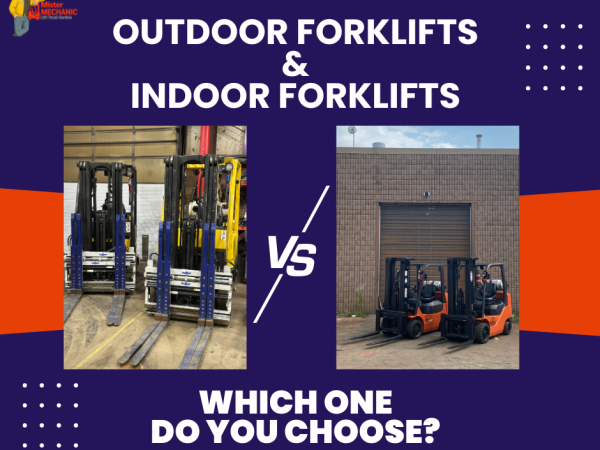
Forklifts Designed for Indoor Use
Indoor facilities require equipment that supports air quality, maneuverability, and operational precision. For these environments, choosing the right power source and configuration is critical.
Indoor forklift advantages and typical features:
– Zero‑emission operation: Electric forklifts produce no exhaust, making them ideal for enclosed spaces where air quality matters.
-Lower noise and vibration: Electric models run quieter than internal combustion alternatives, contributing to a more comfortable work environment.
-Compact design: Electric forklifts often offer tighter turning radiuses and are easier to navigate in narrow aisles, racks, and confined spaces.
-Minimal maintenance needs: Fewer moving parts and no combustion engine means reduced servicing requirements compared to gas or propane units.
Best for: Warehouses, distribution centers, manufacturing plants, food processing, and other indoor operations where emissions, noise, and aisle space are key considerations.
Forklifts Built for Outdoor Use
Outdoor environments present a different set of challenges, like rough or uneven terrain, weather exposure, and sustained duty cycles. Forklifts for outdoor work must be durable and adaptable.
Outdoor forklift advantages and typical features:
-Enhanced traction and stability: Pneumatic tires and rugged chassis help forklifts handle gravel, dirt, and uneven surfaces.
-Greater power and runtime: Propane and diesel forklifts maintain consistent performance throughout long shifts without needing recharge breaks.
-Quick refueling: Propane tanks can be swapped in minutes to keep equipment running with minimal downtime.
-Weather resistance: Designed to operate reliably in outdoor conditions , like rain, dust, and temperature variations included.
Best for: Construction sites, lumber yards, shipping/receiving yards, outdoor storage, and mixed indoor‑outdoor facilities.
What If You Need a Versatile Solution?
Some operations require forklifts that can serve both indoor and outdoor roles. In these cases, considering specific features and configurations can offer flexibility without compromising performance.
Hybrid considerations:
-Electric forklifts with pneumatic tires for smoother outdoor surfaces when emissions or noise are also concerns.
-Propane forklifts equipped with indoor‑approved emissions control and proper ventilation when occasional indoor use is required.
-Battery opportunity charging options for facilities with short breaks where downtime can be minimized.
Pro tip: If you’re unsure which option best fits your needs, test a unit in your actual environment before making a long‑term equipment purchase. Rental evaluations can save you from costly mismatches.
Final Thoughts from Mister Mechanic
At Mister Mechanic, we understand that the right forklift choice goes beyond indoor vs. outdoor labels it’s about matching equipment to your workflow, terrain, and operational rhythm. Whether you’re navigating tight aisles or powering through outdoor tasks, we offer expert guidance, rental options, and tailored recommendations for businesses across Ontario, including Oakville, Toronto, Hamilton, and London.
If you’d like help determining the best forklift strategy for your operation, we’re here to assist.